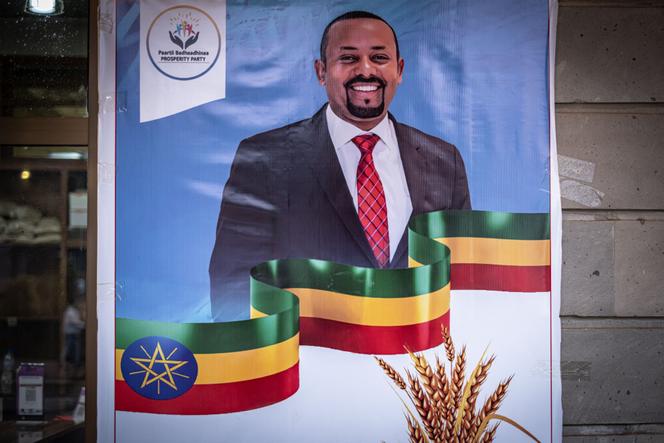
Ethiopia on the age of its host and most catastrophic was

By Abebe Bekele
Ethiopia on the age of its host and most catastrophic was

Image: Le Monde

ADDIS ABABA — Ethiopia faces a precarious geopolitical crossroads as it confronts the threat of what analysts warn could be the nation's most widespread and catastrophic conflict to date. As internal tensions intensify, the federal government and various regional factions are struggling to contain a volatile security landscape that threatens to destabilize not only the Horn of Africa’s most populous nation but the entire surrounding region.

This instability is rooted in the complex federalist structure of the Ethiopian state, which has historically relied on a delicate balance between a strong central authority and diverse regional ethnic groups. Ethiopia’s history—marked by centuries of imperial consolidation, decades of Marxist governance, and subsequent ethnic federalism—has fostered competing visions of national identity. These tensions were exacerbated by the aftermath of the two-year war in the northern Tigray region, which formally concluded in 2022 but left behind deep-seated grievances and a proliferation of armed groups.

Security analysts point to a convergence of crises, including disputes over land rights, the integration of regional militias into the national defense force, and renewed insurgencies in the Amhara and Oromia regions. These internal frictions are unfolding against a backdrop of severe economic strain and food insecurity, which limit the government’s capacity to consolidate control through traditional administrative means.

The instability carries significant implications for Ethiopia’s neighbors, particularly Somalia, Djibouti, and Sudan. Regional fallout is already evident in the heightened security posture along these borders, as neighboring governments fear the spillover of refugees and the potential for armed non-state actors to leverage porous frontiers for cross-border operations. Sudan, currently grappling with its own civil war, remains particularly vulnerable to any security vacuum along the Ethiopian border. Meanwhile, Djibouti—which serves as the primary maritime gateway for Ethiopian imports—is closely monitoring the situation to ensure the continued stability of vital trade corridors.

The international community has expressed mounting concern over the potential for a humanitarian catastrophe. Diplomatic observers suggest that the current trajectory of localized fighting could overwhelm existing relief infrastructures, which are already strained by periodic droughts and climate-induced displacement. While the potential for the conflict to widen necessitates an urgent shift toward inclusive dialogue, extreme political polarization continues to obstruct sustained mediation efforts.

The stability of the Horn of Africa remains tethered to the Ethiopian state’s ability to manage its internal security challenges. With regional stakeholders calling for a de-escalation of rhetoric and a return to political negotiation, the coming months will be decisive. Whether the federal administration can implement a framework for national reconciliation or whether the country descends into further fragmentation remains the central question for the region’s long-term security architecture. The threat of a broader conflict serves as a stark reminder of the fragile nature of stability in the Horn of Africa, where the survival of the state is viewed as an essential component of regional continuity.