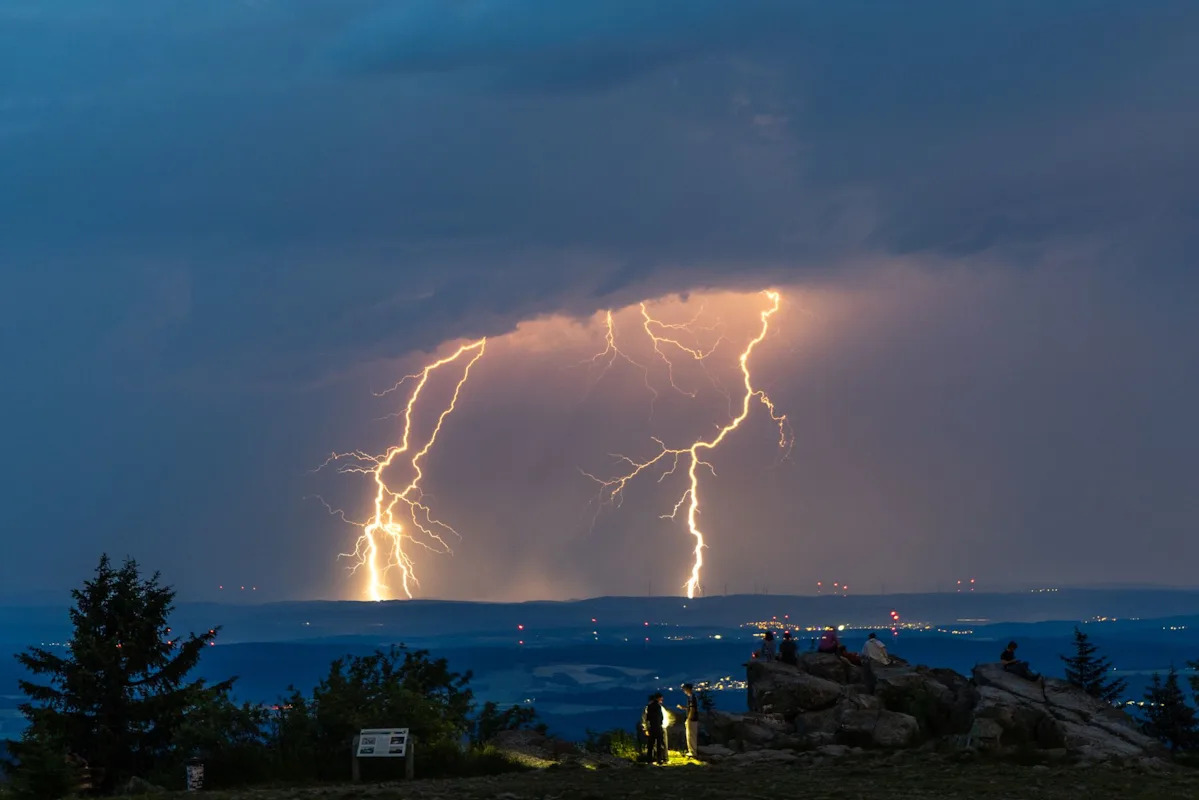
Germany braces for severe weather as heat warnings and thunderstorms hit the west

Image: Yahoo
Extreme heat and violent thunderstorms struck western Germany over the past 24 hours, halting transit, disrupting power, and upending daily routines. The German Weather Service confirmed dangerous temperature spikes as fast-moving convective cells unleashed heavy downpours, hail, and localized wind damage across densely populated cities and rural corridors alike.
Commuters faced immediate gridlock as regional rail operators suspended services to clear waterlogged tracks and scattered debris. Municipal emergency crews are restoring electricity to thousands of affected households and clearing overwhelmed drainage systems. Hospitals have activated backup cooling for at-risk patients, while school districts in several states adjusted schedules to limit outdoor exposure.
State emergency agencies ordered residents to avoid flood-prone valleys and stay indoors during peak temperature hours. The Federal Ministry of the Interior is coordinating with local first responders to deploy high-capacity pumps and continuously monitor river gauges along Rhine tributaries. Public safety campaigns are prioritizing hydration guidelines, heat-stroke prevention, and real-time tracking of official weather bulletins.
The current pattern echoes the devastating 2021 Ahr Valley floods, which permanently reshaped Germany’s extreme weather response. That disaster drove sustained national investments in early-warning networks, reinforced flood barriers, and rapid-response communication protocols. Although today’s storms are highly localized and lack the prolonged saturation that triggered the 2021 tragedy, authorities remain highly alert for sudden flash flooding on hardened urban surfaces.
The same atmospheric instability is actively impacting neighboring Belgium and the Netherlands. Cross-border meteorological teams are sharing live Doppler radar feeds as Dutch and Belgian officials track potential weather spillover across the shared Rhine basin. European climate networks have flagged these compound heat and storm extremes as increasingly common during western Europe’s summer transitions.
Forecast models show the most intense storm cells shifting eastward by late evening, but a residual high-pressure ridge will maintain oppressive temperatures for at least another 48 hours. Officials expect regional rail and power networks to resume full operations by morning, pending final structural checks and debris removal. Residents are advised to prepare for secondary localized flooding as saturated ground absorbs evening rainfall and must comply with all municipal emergency directives.
Germany