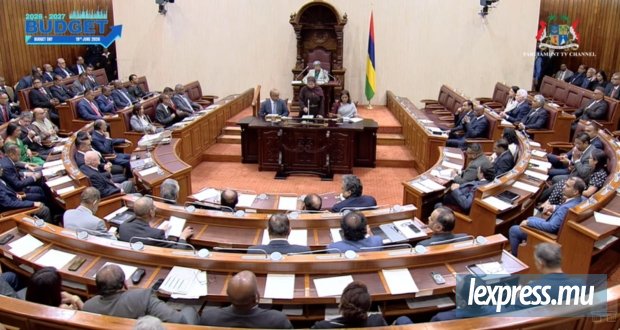
Les parlementaires mauriciens ne percevront plus de pension après deux mandats

Image: lexpress.mu
The Mauritian government’s decision to cap parliamentary pensions at two legislative terms will immediately redirect an estimated $4.2 million annually away from long-term sovereign liabilities and into active fiscal operations under the 2026–2027 budget. By eliminating a legacy entitlement that previously compounded regardless of tenure length, Port Louis is fundamentally restructuring the compensation architecture for public sector leadership. This targeted containment strategy trims long-term expenditure forecasts for the Ministry of Finance, lowers contingent liabilities, and preserves Treasury liquidity for near-term economic development initiatives. Consequently, the financial calculus for both sitting lawmakers and prospective candidates is permanently altered, shifting the profession from a lifelong entitlement to a fixed-tenure engagement.
This policy recalibration reflects a broader industry shift away from traditional, state-heavy economic planning toward a leaner governance framework that increasingly aligns with private-sector employment standards. Originally instituted in the post-1968 independence era, the island’s parliamentary pension system was designed to attract and retain legal and administrative talent when private-sector career safety nets were scarce. For decades, these guarantees functioned as critical retention tools during Mauritius’s structural pivot from a plantation-based economy to a diversified, services-driven market. However, recent actuarial assessments indicate that unchecked benefit accruals are now threatening to outpace civil service revenue growth, necessitating a structural modernization that treats legislative service as a time-bound professional contract rather than a permanent state vocation.
With approximately 140,000 workers in the national public sector, applying this pension truncation to the National Assembly’s 70 lawmakers establishes a clear fiscal and operational benchmark for upcoming compensation reviews across the broader administration. Everyday taxpayers and municipal workers will experience the downstream impact as freed capital is legally ring-fenced for digital infrastructure and renewable energy procurement. This strategic reallocation is positioned to compress utility costs and accelerate broadband market expansion over the medium term. The reform closely mirrors a remuneration overhaul in neighboring Seychelles during the late 2010s, which eased sovereign debt servicing pressures and redirected capital toward private-sector job creation. By severing post-tenure income guarantees, the policy will likely accelerate legislative turnover while filtering political candidacies toward professionals with diversified revenue streams and defined-term policy objectives.
Market analysts project that the legislative pension cap will generate immediate liquidity for Treasury bond issuances, directly strengthening the island’s sovereign credit metrics as rating agencies reassess fiscal sustainability horizons. Foreign direct investors are interpreting the reduction in off-balance-sheet pension obligations as a de-risking signal, clearing the path for expanded public-private partnership pipelines in port logistics, sustainable tourism, and offshore financial services. Over the next two electoral cycles, disciplined reinvestment of these liberated reserves should tighten capital allocation toward high-yield productivity projects, provided transparency mechanisms remain strictly enforced. The long-term market trajectory will ultimately depend on whether redirected state capital translates into measurable public-sector efficiency gains, potentially cementing Mauritius as a regional benchmark for fiscal optimization in emerging democracies.
Mauritius