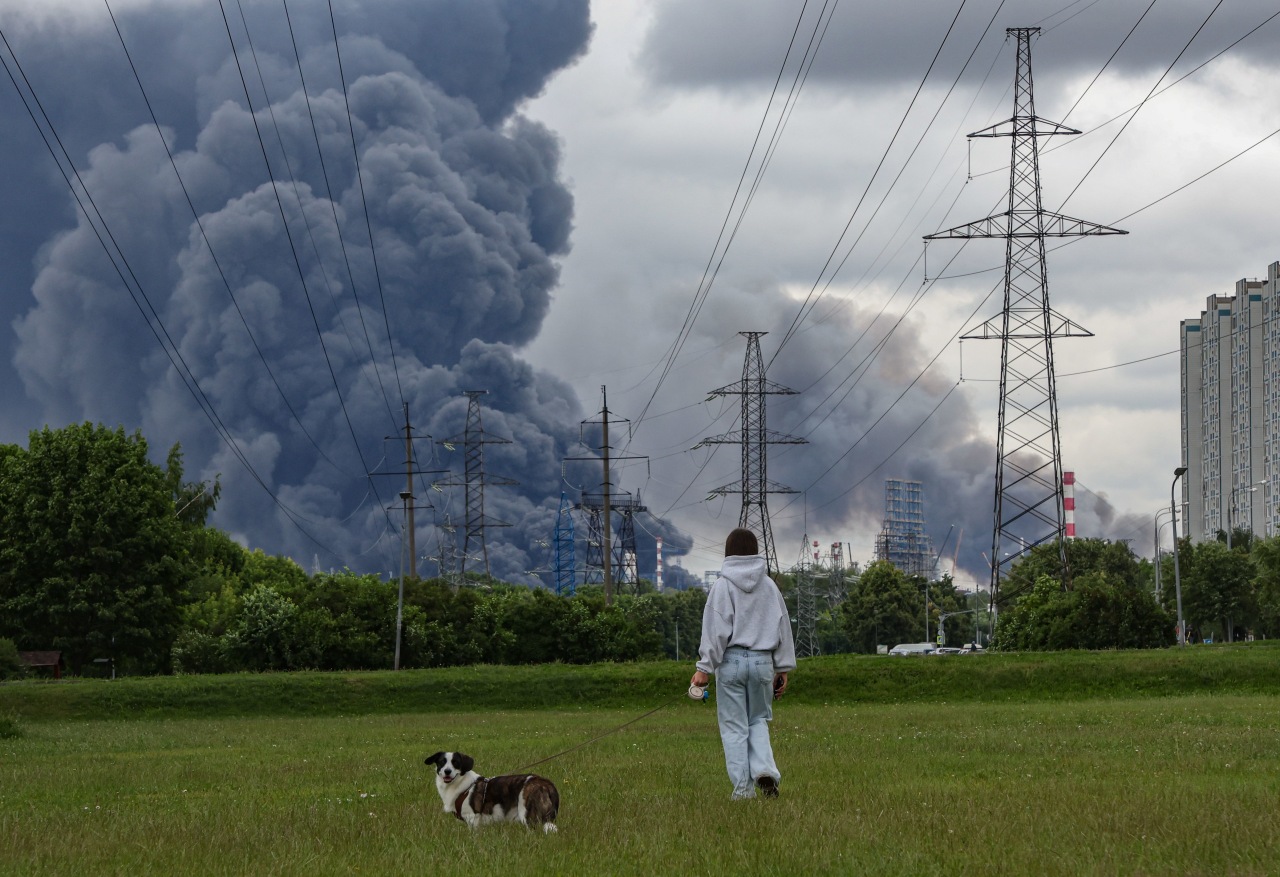
Mogadishu rocked by second day of heavy clashes as government and opposition forces trade fire

Image: WSJ
What happens when the machinery of the state turns its heavy artillery inward against the very political rivals it claims to represent? For a second consecutive day, Mogadishu’s skyline has been punctuated by sustained barrages as federal security forces exchange fire with entrenched opposition factions, effectively transforming Somalia’s capital into an active theater of constitutional and military rupture. Beyond the immediate destruction and the rapid exodus of terrified residents, the violence lays bare a systemic fracture: a political compact so deteriorated that armed confrontation has effectively replaced negotiation as the primary mechanism for resolving elite disputes.
Urban combat in Mogadishu is far from unprecedented; it is, tragically, cyclical. Since the central government’s collapse in 1991, the capital has repeatedly functioned as the primary battleground where elite disagreements are settled through force rather than ballots or dialogue. Historically, major power transitions have triggered similar artillery duels and street-level standoffs, typically following contested parliamentary mandates or disputes over federal-state boundaries. International monitors estimate that over the past decade, political violence across Somalia has displaced more than three million people nationwide, with fighting centered on the capital disproportionately exacerbating the country’s humanitarian crisis.
The current escalation is framed in starkly different terms by the belligerents. Federal authorities justify the offensive as a necessary operation to dismantle unauthorized militias and restore constitutional order, arguing that opposition strongholds have devolved into de facto armed camps that threaten national security. Opposition leaders, conversely, characterize the artillery campaign as an overreach designed to suppress legitimate political dissent, cautioning that militarizing electoral grievances risks resurrecting the clan-based militias that once fragmented the country. These domestic fault lines reverberate well beyond Somalia’s borders. Neighboring Ethiopia is closely monitoring the instability, aware that a weakened Mogadishu could disrupt the regional balance of counterterrorism cooperation, intelligence sharing, and border security across the Horn of Africa. Simultaneously, the ongoing drawdown of the African Union Transition Mission in Somalia has intensified concerns among Western and Gulf backers that internal power struggles could unravel hard-won security gains against extremist networks operating through the country’s southern and central corridors.
How this crisis evolves will likely follow one of several divergent trajectories rather than a predetermined outcome. Should regional mediators with leverage over both federal and opposition blocs intervene rapidly, a negotiated ceasefire could create space for revised power-sharing arrangements and the phased demilitarization of urban districts. Alternatively, a prolonged siege dynamic may solidify, forcing opposition figures into entrenched defensive postures while federal troops secure critical government infrastructure. This would effectively partition the capital’s political geography and institutionalize localized security vacuums. A third, more volatile possibility entails the gradual splintering of the state’s own security apparatus, as commanders face mounting pressure to choose between institutional loyalty and factional alignment. Such fragmentation could draw external patrons deeper into Somalia’s internal calculus, transforming localized clashes into broader proxy competitions. Whichever scenario materializes, Mogadishu’s current artillery exchanges underscore that Somalia’s next chapter of governance will be determined not solely within parliamentary chambers, but at the volatile intersection of political ambition and armed capability.
Somalia