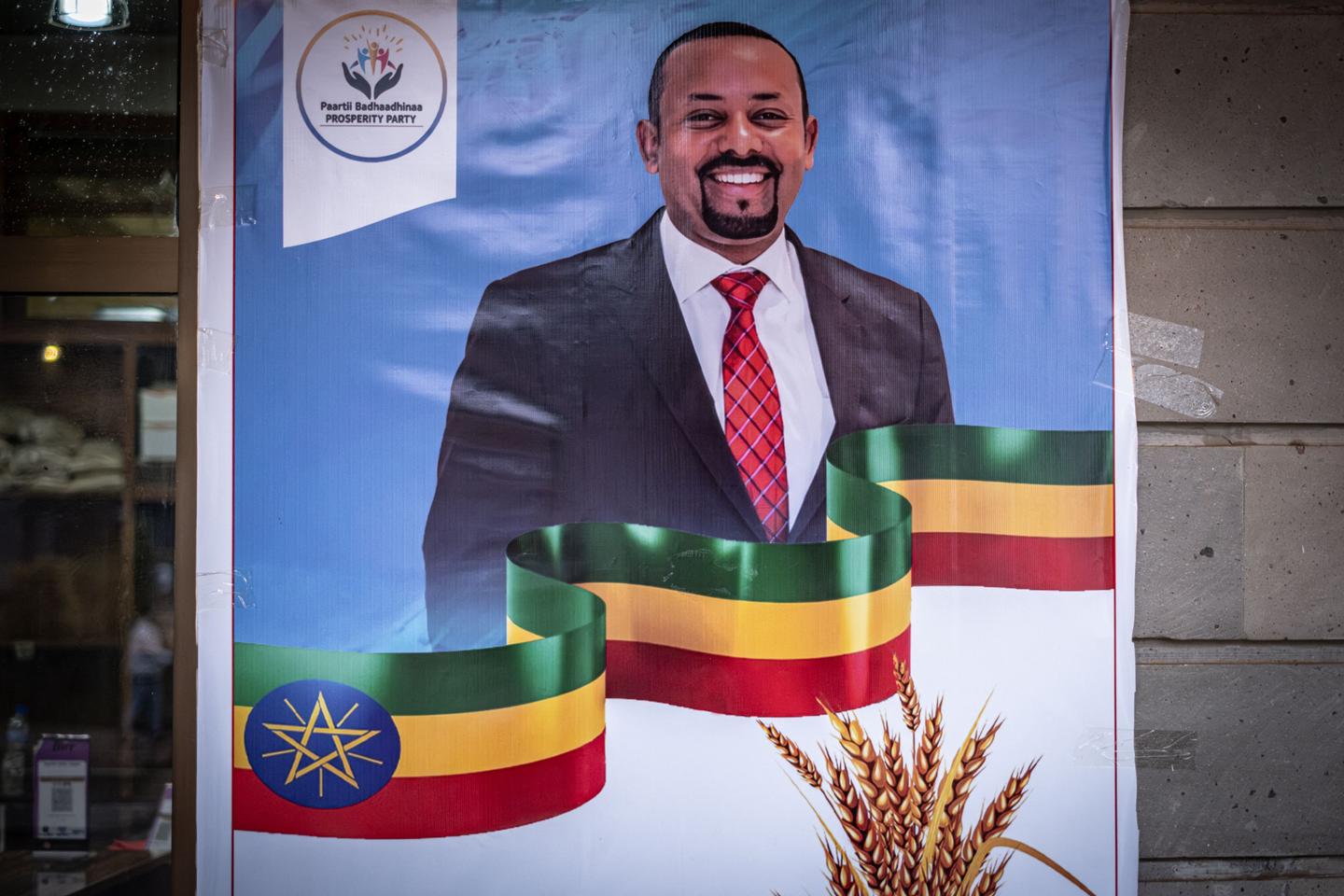
Prosperity Party wins with many majority in Ethiopia’S June 1 election

Image: Le Monde
The sweeping electoral mandate claimed by Ethiopia’s Prosperity Party raises a fundamental question: can overwhelming parliamentary dominance translate into durable national unity, or will it merely accelerate the political fragmentation that has long shadowed the Horn of Africa’s most populous state? According to preliminary data released by the National Election Board of Ethiopia, the ruling coalition secured approximately 85 percent of contested seats following the June 1 ballot, a margin that underscores both organizational discipline and the logistical asymmetry of a campaign conducted across a deeply fractured federation.
Government officials frame the outcome as a popular repudiation of separatist agendas and a validation of Prime Minister Abiy Ahmed’s reform agenda. A senior Prosperity Party strategist stated that the results reflect a clear public desire for institutional consolidation and macroeconomic stabilization, pointing to robust voter turnout in secured urban corridors. Independent election monitors and opposition coalitions, however, highlight structural disparities in the process, arguing that stringent security measures across parts of Amhara, Oromia, and contested southern zones effectively curtailed campaign outreach and ballot distribution. Civil society advocates caution that legislative supermajorities do not inherently produce inclusive governance, particularly while localized peace negotiations and regional administrations continue operating with minimal federal coordination.
Ethiopia’s modern political trajectory has long been defined by the friction between centralized control and decentralized ethnic federalism. Following the dissolution of the Ethiopian People’s Revolutionary Democratic Front coalition in 2019, the Prosperity Party was constructed as a unifying national vehicle intended to transcend entrenched regional patronage networks. While the restructuring initially drew international optimism, subsequent electoral cycles revealed that top-down institutional mergers routinely outpace organic grassroots political integration. Economic pressures further complicate the mandate; with consumer inflation persisting in double digits and sovereign debt servicing straining fiscal reserves, the incoming parliamentary term must prioritize rapid economic stabilization alongside nationwide security normalization.
The implications of this electoral consolidation extend directly into regional stability calculations. Ethiopia’s domestic cohesion heavily influences security architectures across the Horn of Africa, particularly as Sudan’s protracted civil war disrupts vital Red Sea and Nile Valley supply chains, and Eritrea’s border posture remains closely synchronized with Addis Ababa’s counterinsurgency strategy. Regional analysts emphasize that a politically cohesive Ethiopia could streamline East African infrastructure financing and cross-border migration management, whereas persistent internal fractures risk exporting armed instability into neighboring Somalia and South Sudan.
As the Prosperity Party moves to formalize its legislative authority, policymakers face several divergent strategic pathways. One trajectory hinges on expanded dialogue with regional commanders, coupled with negotiated constitutional adjustments that clarify revenue-sharing mechanisms and delineate local security jurisdictions. A second pathway anticipates tighter centralization of administrative control under a security-led governance model, which could streamline service delivery but risks reigniting federalist resistance. A third avenue relies on leveraging multilateral debt relief and agricultural modernization to stimulate near-term employment, creating the economic breathing room necessary for political trust-building. The upcoming parliamentary session will likely reveal which framework gains institutional momentum, though no single electoral cycle will resolve the enduring equilibrium between national unity and regional autonomy.
Ethiopia