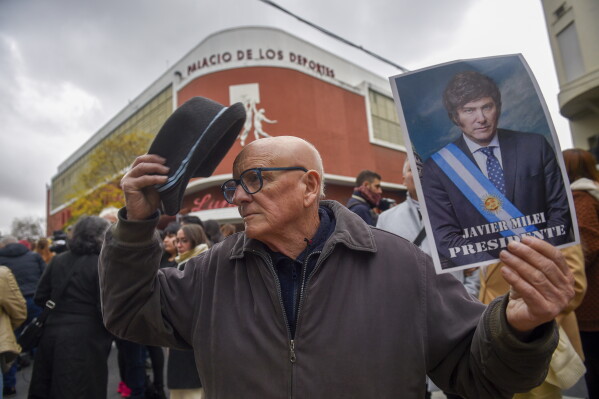
Catholic Church urgency Congress to reform Milei's property bill

Image: AP News
The Catholic Church in Argentina has issued a pointed call for Congress to overhaul President Javier Milei’s proposed property bill, marking a significant escalation in friction between the libertarian administration and one of the nation’s most influential social institutions. At the heart of this confrontation lies a fundamental disagreement over the reach of state policy versus the urgency of fiscal austerity. The Church, acting through its social commissions, argues that the current legislative framework threatens the stability of vulnerable populations, while the Milei administration maintains that such measures are indispensable to reversing decades of chronic economic mismanagement and runaway inflation.
Argentina’s complex relationship with the Catholic Church is deeply embedded in its national identity; the institution has historically acted as both a political broker and a provider of last resort during times of crisis. Since the return to democracy in 1983, the Church has frequently balanced its role as a spiritual authority with that of a pragmatic mediator during periods of social unrest. Today, however, that traditional bridge-building role is being tested by an administration determined to dismantle the bureaucratic status quo. This tension mirrors broader regional shifts, such as those seen in Brazil, where religious organizations have similarly struggled to balance advocacy for social safety nets against the austerity agendas of populist leaders.
The government’s primary objective, as outlined in the proposed property reform, is to stabilize the macroeconomic environment by streamlining state assets and reducing public spending. Supporters of the president argue that the legislation is a necessary, albeit painful, corrective measure to attract foreign investment and restore market confidence. They contend that the state can no longer afford to subsidize property sectors or sustain complex regulatory environments that foster corruption. From this perspective, the Church’s intervention is viewed as an intrusion by an institution that does not bear the fiscal responsibility of balancing the national budget.
Conversely, the Church advocates for a "social perspective" on property rights, emphasizing the inherent dignity of housing and the protection of long-term tenants and low-income families. Church leaders argue that the bill in its current form lacks sufficient safeguards for those with no recourse in a deregulated market. They fear that a rapid, market-driven overhaul will exacerbate the existing poverty gap, leading to further displacement in urban centers where social services are already strained. The Church asserts that economic efficiency cannot come at the expense of social cohesion, suggesting that legislative reform must include robust protections for the most vulnerable to prevent a humanitarian fallout.
The political stakes of this debate are high. As the bill moves through committee, the Church’s intervention provides political cover for opposition lawmakers hesitant to back the president’s sweeping reforms. By framing the debate around social justice and the rights of the poor, the Church has successfully transformed a technical fiscal dispute into a moral imperative, complicating the administration’s efforts to pass the legislation without significant concessions.
Ultimately, the impasse reflects a country at a crossroads. The debate over the property bill has moved beyond simple economics, evolving into a contest over the vision for Argentina’s future: one defined by the efficiency of the free market, or one protected by the traditional safeguards of a social welfare state. As Congress weighs these conflicting pressures, the outcome will likely determine not only the immediate fate of the property market but also the long-term political influence of the Church in an era of radical economic restructuring.
Argentina