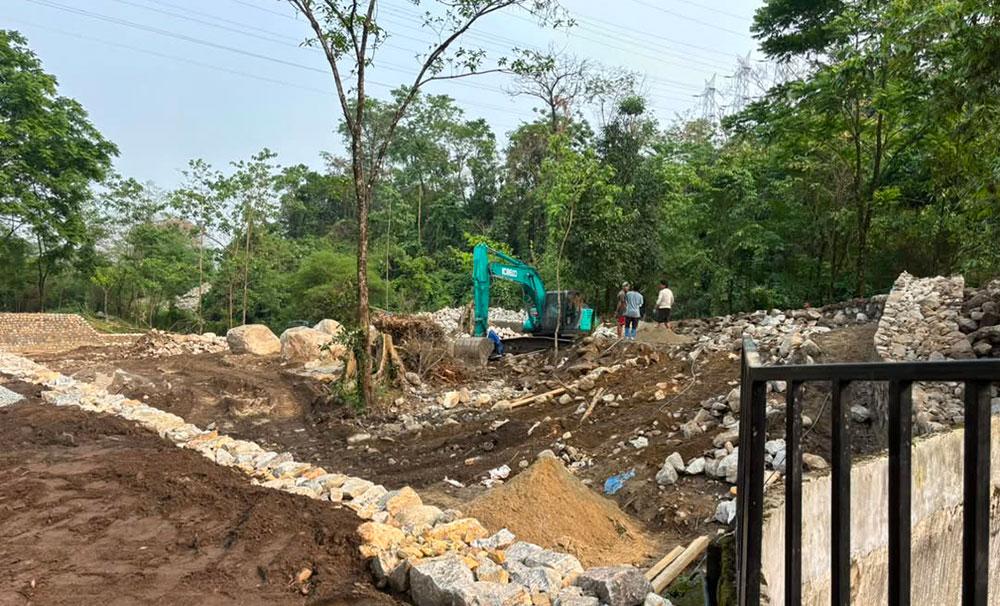
Jigmeling wildlife centre undergoes major expansion

Image: Kuensel Online
The first light of dawn filters through the dense chir pine canopy as Pema Dorji kneels in the damp earth of a recovery pen, her hands steady as she prepares a herbal compress for a juvenile Himalayan black bear. The bear’s breathing is shallow but even, a fragile rhythm in the cool morning air that carries the faint scent of pine resin and damp soil. For Dorji and a small team of keepers, this quiet ritual has defined their days for years, but today, the familiar routine feels different. Around them, heavy machinery rests beside newly poured concrete footings, and the skeletal frames of expanded enclosures rise against the ridge. The Jigmeling Wildlife Centre, long a sanctuary for injured and orphaned creatures of Bhutan’s eastern highlands, is undergoing its most significant transformation since opening its gates.
The expansion, first outlined in reporting by Kuensel, will nearly double the facility’s rehabilitation capacity, introducing climate-controlled veterinary wards, dedicated quarantine zones, and native-plant enrichment areas designed to replicate natural foraging environments. Staff and local volunteers have spent months cataloging past rescue cases, tracking recovery timelines and mortality rates to ensure the new layout directly addresses historical gaps in care. “Every scarred animal we’ve treated taught us what we were missing,” Dorji says, wiping dirt from her palms. “Now we can stabilize them properly before they’re ready to face the wild again.”
Bhutan’s commitment to environmental stewardship is deeply woven into both its governance and its cultural identity. Long before modern conservation frameworks gained traction globally, Himalayan communities in the region maintained seasonal hunting restrictions and protected sacred forest groves, practices later enshrined in a constitutional mandate requiring at least sixty percent of the kingdom to remain under permanent tree cover. Jigmeling emerged from that living heritage, transitioning from a modest care outpost into a critical node for regional wildlife medicine. The current expansion bridges traditional ecological knowledge with contemporary veterinary standards, signaling a deliberate shift from reactive rescue to proactive population management.
The centre’s upgraded infrastructure also strengthens vital transboundary conservation networks. As habitat fragmentation and climate shifts intensify along the India-Bhutan border, rehabilitated species such as clouded leopards and migratory ungulates increasingly depend on contiguous wildlife corridors that cross international boundaries. Veterinary staff at Jigmeling now routinely share diagnostic data and release protocols with counterparts in India’s neighboring states of Assam and Arunachal Pradesh, ensuring consistent care standards across shared ecosystems. Locally, the project has galvanized community involvement: former agricultural workers and young volunteers have joined rehabilitation crews, while nearby schools host field programs that transform conservation awareness into sustainable livelihoods.
By late afternoon, the day’s final rounds begin as the recovering bear tests its weight against the reinforced den wall, its movements gradually growing steadier. Dorji watches from the observation deck, the steady hum of construction fading beneath the rustle of wind in the upper canopy. The expansion is still a work in progress, but the momentum it carries is already reshaping the valley. As more animals find their way back to intact forests, and as local hands continue to shape the sanctuary’s evolution, the work at Jigmeling stands as a quiet testament to a fundamental truth: when communities invest in the wildlife they share their mountains with, both find their way forward.
Bhutan