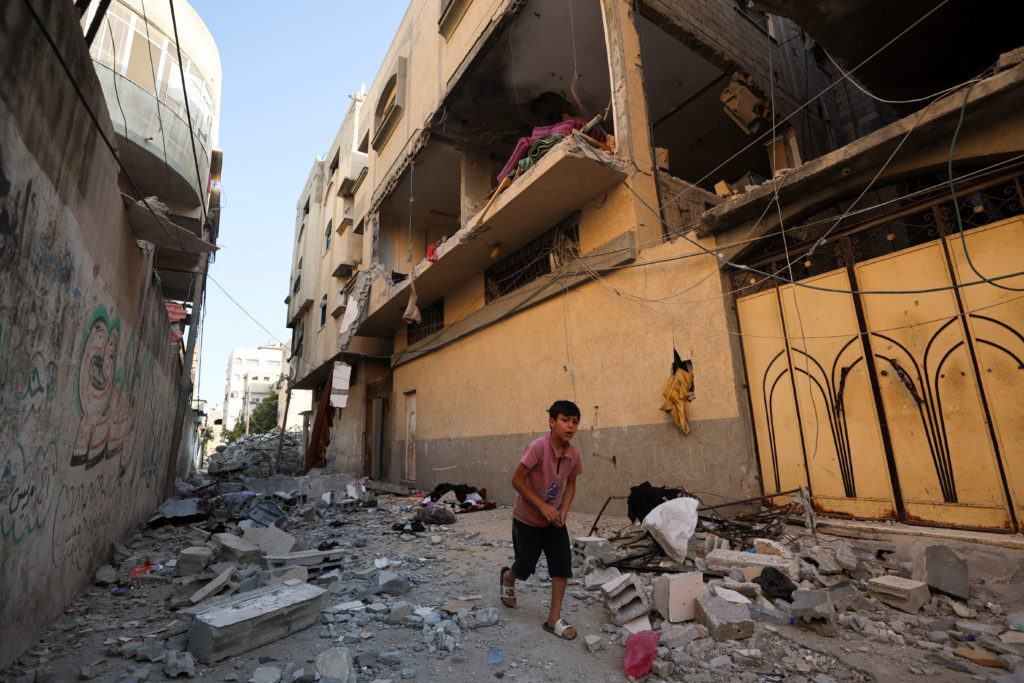
Ceasefire and Hostage Release in Gaza

Does a cessation of hostilities mark the end of a war, or merely its latest intermission? The January 19, 2025, implementation of a ceasefire and prisoner exchange in Gaza has reignited this enduring question across global diplomatic corridors. While the return of Israeli hostages and the simultaneous release of Palestinian detainees offer a profound human reprieve, the geopolitical architecture underpinning the accord remains untested by time and complicated by deeply entrenched, competing security paradigms.
The agreement’s initial phase has already transformed material conditions on the ground. According to United Nations humanitarian coordination offices, daily aid convoys entering the enclave have surged, with essential supply deliveries tripling within the first week alone. The phased structure—forged through intensive backchannel negotiations involving Qatar, Egypt, and the United States—explicitly links the continued exchange of captives to the gradual restoration of civilian infrastructure. Israeli security officials characterize the arrangement as a tactical recalibration that prioritizes the recovery of abducted citizens while preserving stringent monitoring mechanisms. Palestinian negotiators, conversely, describe the detainee swap as the necessary foundation for any credible, long-term political horizon. International mediators, meanwhile, regard the pact as a vital proof of concept, demonstrating that crisis diplomacy can temporarily override rigid military doctrines.
This competing set of interpretations echoes the structural vulnerabilities of previous diplomatic pauses. The 2014 ceasefire, for example, temporarily halted kinetic operations but deliberately deferred critical questions regarding border governance and administrative sovereignty, ultimately creating a vacuum that facilitated renewed mobilization. Historical precedent consistently shows that without an internationally sanctioned civil administration, humanitarian intermissions tend to function as temporary pressure valves rather than instruments of durable statecraft. Regional actors are acutely aware of these stakes. Egypt, managing severe economic spillover and demographic pressures along the Sinai frontier, assesses the arrangement through an uncompromising security lens. Cairo’s diplomatic investment is fundamentally anchored to preventing a governance collapse that could reactivate militant transit corridors, a concern echoed by Jordanian strategists who warn that prolonged economic stagnation in Gaza will inevitably export instability across the Levant.
The trajectory of this truce now bifurcates into distinct strategic pathways. Should international guarantors successfully transition from emergency triage to a coordinated reconstruction mandate, the pause could incubate a technocratic interim administration capable of gradually stabilizing utility grids, trade logistics, and cross-border security protocols. Conversely, a failure to institutionalize sustained funding and coherent political oversight risks reverting the territory to a managed, low-intensity equilibrium, where violations are contained through kinetic deterrence rather than resolved through diplomatic architecture. A third pathway envisions a broader regional recalibration: Gulf financial commitments and European development funds could operate independently of bilateral security frameworks, effectively internationalizing Gaza’s civil administration under multilateral trusteeship. Each model demands rigorous external oversight, yet the ultimate determinant will be whether competing factions can translate a negotiated breathing space into a recognized and resilient political order.
Israel