National Leader Gurbanguly Berdimuhamedov Visits Monaco to Strengthen Bilateral Ties and Discuss Multilateral Cooperation

National Leader Gurbanguly Berdimuhamedov Visits Monaco to Strengthen Bilateral Ties and Discuss Multilateral Cooperation

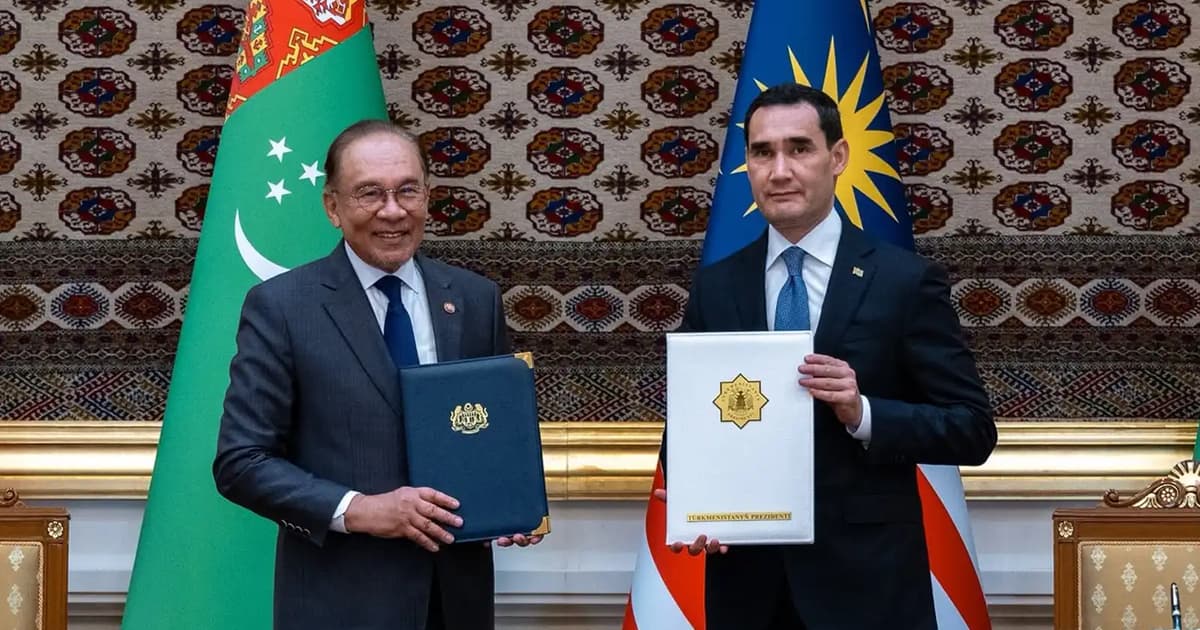
Can a state long defined by geographic insulation and hydrocarbon reliance successfully leverage microstate diplomacy to diversify its international portfolio, or does such outreach risk remaining an elaborate exercise in symbolic statecraft? The January 19–20, 2025 visit of National Leader Gurbanguly Berdimuhamedov to Monaco crystallizes this question. Convened to mark the tenth anniversary of bilateral diplomatic ties, the engagements with Prince Albert II focused on expanding cooperation across culture, sports, tourism, and humanitarian dialogue. Yet beneath the ceremonial veneer lies a calculated recalibration of Ashgabat’s foreign policy, one that seeks to align its long-standing neutrality with proactive multilateral engagement.

For Ashgabat, the outreach represents a strategic pivot away from traditional energy-centric statecraft toward softer, institutionally resilient channels. Policy researchers at regional security institutes emphasize that this approach is driven less by immediate trade volumes than by a desire to embed Turkmenistan within networks that transcend regional volatility. “Monaco’s established reputation as a neutral convener for environmental and sporting initiatives offers Ashgabat a low-friction entry into high-visibility diplomacy,” they observe. European trade observers, however, caution against overstating economic spillovers, pointing out that direct bilateral investment flows have historically remained marginal. The principality’s economy, heavily anchored in financial services and luxury sectors, lacks obvious synergies with Turkmenistan’s commodity-driven exports, making cultural and athletic exchanges the most viable near-term deliverables.

Historical parallels lend critical nuance to the encounter. Since its thirteenth-century founding, Monaco has survived by mastering diplomatic agility and niche soft power—a strategic architecture that resonates with Turkmenistan’s own post-Soviet trajectory and its 1995 United Nations-recognized permanent neutrality. Today, that doctrine is gradually evolving into structured multilateralism. This realignment mirrors broader shifts across Central Asia, particularly as neighboring Uzbekistan accelerates its European outreach through trans-regional transit corridors. Ashgabat’s engagement with Monaco could eventually complement these cross-border logistics frameworks, provided current cultural and tourism agreements mature into regulatory coordination or jointly financed institutional initiatives.

The trajectory of this partnership will ultimately hinge on bureaucratic follow-through. If technical working groups on sustainable tourism and youth athletics solidify into binding frameworks, the relationship could establish a replicable template for targeted diplomatic outreach across the Eurasian steppe. Conversely, the dialogue risks plateauing at ceremonial exchanges unless anchored by dedicated funding mechanisms or United Nations-aligned humanitarian projects. A third plausible scenario envisions the bilateral axis serving as a conduit for Turkmenistan to participate in Monaco-hosted multilateral platforms on climate resilience and maritime sustainability, effectively linking Caspian ecological governance with broader Mediterranean conservation efforts. The next two fiscal cycles will reveal whether this partnership can withstand the friction of implementation or recede into diplomatic routine.